What Are Cybersecurity Solutions? A Complete Guide for Modern Businesses
May 21, 2026, 13 min read
Cybersecurity solutions are the technologies, processes, services, and strategies organizations use to protect their systems, data, users, applications, networks, and digital operations from cyber threats. But in today’s environment, cybersecurity solutions are no longer just tools installed to block malware or filter suspicious emails. They are part of a broader business risk strategy that helps companies stay operational, compliant, resilient, and trusted.
For security leaders, CISOs, IT managers, and business decision-makers, the real question is not only “What cybersecurity solutions do we need?” but “Which solutions reduce the most risk for our business model, threat exposure, industry, and budget?”
This guide explains cybersecurity solutions in a practical, vendor-neutral way, combining glossary-style clarity with expert analysis, current statistics, real-world attack examples, and a framework organizations can use to evaluate their security stack.
AI-Answer-Friendly Summary
Cybersecurity solutions are tools, platforms, services, and policies designed to protect digital assets from cyberattacks, unauthorized access, data breaches, ransomware, phishing, insider threats, cloud misconfigurations, and operational disruption. Common cybersecurity solutions include endpoint protection, firewalls, identity and access management, zero trust security, cloud security, email security, threat intelligence, vulnerability management, security awareness training, backup and disaster recovery, and managed detection and response. The best cybersecurity strategy is not based on buying more tools, but on aligning security controls with business risk, regulatory requirements, attack surface visibility, and incident response readiness.
Why Cybersecurity Solutions Matter More Than Ever
Cybersecurity has become a board-level issue because attacks now affect revenue, operations, customer trust, legal exposure, and brand reputation. According to IBM’s 2025 Cost of a Data Breach Report, the global average cost of a data breach reached $4.44 million, showing that cyber incidents remain financially significant even when organizations improve detection and containment capabilities. IBM Cost of a Data Breach Report 2025
Verizon’s Data Breach Investigations Report also continues to show how human behavior, credential misuse, third-party exposure, and social engineering remain major drivers of breaches. This means cybersecurity solutions must protect not only infrastructure, but also people, identities, vendors, and workflows. Verizon DBIR
Meanwhile, ENISA’s threat landscape reporting highlights ransomware and availability attacks such as DDoS as recurring top threats, with attackers increasingly using trusted cloud services and legitimate platforms to hide malicious activity. ENISA Threat Landscape
In simple terms: cybersecurity solutions matter because modern businesses are digital by default. If digital systems stop working, the business stops working.
What Are Cybersecurity Solutions?
Cybersecurity solutions are protective controls that help organizations prevent, detect, respond to, and recover from cyber threats. These solutions may be delivered as software, hardware, cloud platforms, managed services, advisory services, policies, frameworks, or internal security practices.
A cybersecurity solution may protect a single layer, such as endpoints or email, or it may support a broader security function such as threat detection, identity governance, attack surface management, or incident response.
Examples include:
- Endpoint detection and response tools
- Firewalls and network security platforms
- Identity and access management systems
- Multi-factor authentication
- Cloud security posture management
- Application security testing tools
- Security information and event management platforms
- Managed detection and response services
- Cyber threat intelligence platforms
- Backup, disaster recovery, and ransomware recovery solutions
For a broader view of available security vendors and platforms, explore the Cyber Security Software & Tools directory on GCS Network.
Cybersecurity Solutions vs. Cybersecurity Strategy
A common mistake is to treat cybersecurity solutions and cybersecurity strategy as the same thing. They are not.
Cybersecurity solutions are the tools and services used to protect the organization. Cybersecurity strategy is the decision-making framework that determines which risks matter most, which controls should be prioritized, how investments are measured, and how security supports business goals.
A company can buy expensive cybersecurity tools and still remain vulnerable if it lacks:
- Asset visibility
- Clear ownership of security responsibilities
- Incident response planning
- Security awareness
- Patch management discipline
- Identity governance
- Executive accountability
This is why mature security programs focus on risk reduction, not tool accumulation.
The Main Types of Cybersecurity Solutions
1. Network Security Solutions
Network security solutions protect the communication paths between users, devices, applications, cloud environments, and data centers. These solutions help identify malicious traffic, block unauthorized access, and segment sensitive systems.
Common network security solutions include:
- Next-generation firewalls
- Intrusion detection and prevention systems
- Secure web gateways
- DDoS protection
- Network segmentation
- Zero trust network access
Network security is especially important for organizations with hybrid infrastructure, remote employees, branch offices, cloud workloads, or operational technology environments.
2. Endpoint Security Solutions
Endpoint security protects laptops, desktops, servers, mobile devices, and other user-facing systems. Since attackers often enter through compromised endpoints, endpoint protection remains one of the most important layers of cybersecurity.
Modern endpoint security solutions go beyond traditional antivirus. They often include behavioral detection, endpoint detection and response, automated isolation, threat hunting, and forensic investigation capabilities.
Endpoint security helps defend against:
- Malware
- Ransomware
- Credential theft
- Fileless attacks
- Unauthorized software execution
- Insider misuse
3. Identity and Access Management Solutions
Identity has become the new security perimeter. As organizations move to cloud platforms, SaaS tools, and remote work models, attackers increasingly target user accounts, privileged credentials, and weak authentication practices.
Identity and access management solutions help ensure that the right people have the right access to the right systems at the right time.
Core identity security controls include:
- Multi-factor authentication
- Single sign-on
- Privileged access management
- Identity governance
- Conditional access policies
- Least privilege access
For a deeper explanation of privileged access and Zero Trust, read Why Privileged Access Management Is Critical for Cybersecurity and Zero Trust.
4. Zero Trust Security Solutions
Zero Trust is a security model based on the principle of “never trust, always verify.” Instead of assuming that users or devices inside the network are safe, Zero Trust requires continuous validation of identity, device posture, access context, and risk.
Zero Trust solutions commonly include:
- Zero trust network access
- Identity-based access controls
- Microsegmentation
- Continuous monitoring
- Device compliance checks
- Adaptive authentication
Zero Trust is not a single product. It is an architecture and operating model that connects identity, network, endpoint, cloud, and data security.
To understand this model in more detail, visit Zero Trust Security Model and How to Close the Gaps in Zero Trust.
5. Cloud Security Solutions
Cloud security solutions protect cloud infrastructure, applications, workloads, identities, APIs, containers, and data. As organizations adopt AWS, Microsoft Azure, Google Cloud, Kubernetes, and SaaS platforms, cloud security becomes a core requirement rather than a specialist function.
Important cloud security categories include:
- Cloud security posture management
- Cloud workload protection
- Cloud-native application protection platforms
- Container security
- API security
- SaaS security posture management
- Cloud infrastructure entitlement management
The biggest cloud security risks often come from misconfigurations, excessive permissions, exposed storage, weak API controls, and poor visibility across multi-cloud environments.
6. Application Security Solutions
Application security solutions help organizations identify and fix vulnerabilities in software before attackers exploit them. This is especially important for companies building web applications, mobile apps, APIs, SaaS products, and digital platforms.
Application security solutions may include:
- Static application security testing
- Dynamic application security testing
- Software composition analysis
- API security testing
- Runtime application self-protection
- Web application firewalls
- Secure code review
Application security is no longer only a developer issue. It directly affects customer trust, compliance, product reliability, and revenue continuity.
7. Email Security and Phishing Protection
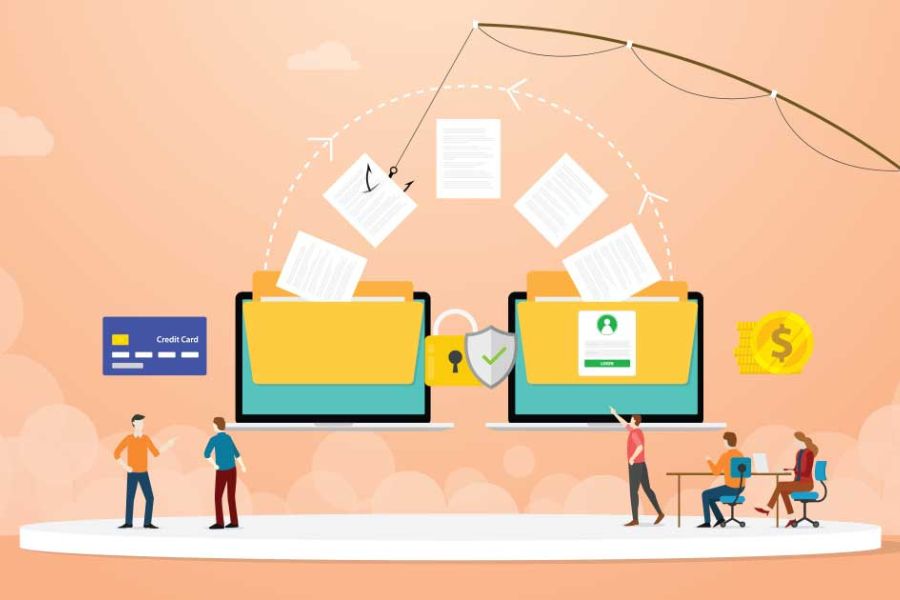
Email remains one of the most common attack channels because it targets human behavior. Phishing, business email compromise, malicious attachments, credential harvesting, and social engineering attacks can bypass traditional controls if organizations do not combine technology with awareness.
Email security solutions typically include:
- Anti-phishing protection
- Attachment sandboxing
- Domain authentication
- Impersonation detection
- URL rewriting and scanning
- User reporting tools
However, technology alone is not enough. Employees need continuous training, realistic simulations, and simple reporting workflows.
8. Threat Intelligence Solutions
Threat intelligence solutions collect, analyze, and prioritize information about cyber threats, threat actors, vulnerabilities, malware, campaigns, infrastructure, and attack techniques. The goal is not to collect more data, but to help security teams make better decisions faster.
Good threat intelligence answers questions such as:
- Who is likely to target us?
- Which vulnerabilities are actively exploited?
- Which assets are exposed?
- Which threats matter most to our industry?
- What should we fix first?
For more context, read What Does a Threat Intelligence Team Do? and What Is Threat Hunting in Cyber Security?.
9. Vulnerability Management Solutions
Vulnerability management solutions help organizations identify, prioritize, remediate, and verify security weaknesses across systems, applications, cloud assets, and third-party components.
Modern vulnerability management is moving from “scan everything and send long reports” to risk-based prioritization. This means security teams focus first on vulnerabilities that are exploitable, exposed, business-critical, or already used by attackers.
A mature vulnerability management program should include:
- Continuous asset discovery
- Vulnerability scanning
- Exploitability analysis
- Patch prioritization
- Remediation tracking
- Executive risk reporting
10. Security Monitoring, SIEM, SOAR, and MDR
Security monitoring solutions collect and analyze signals from endpoints, networks, identities, applications, cloud environments, and security tools. The goal is to detect suspicious behavior before it becomes a major incident.
Key solutions include:
- Security information and event management
- Security orchestration, automation, and response
- Extended detection and response
- Managed detection and response
- Security operations center services
For many small and mid-sized organizations, MDR is especially valuable because it provides access to expert monitoring and response capabilities without requiring a fully staffed internal SOC.
11. Backup, Disaster Recovery, and Cyber Resilience Solutions
Backup and disaster recovery solutions are critical because prevention will never be perfect. When ransomware, destructive malware, insider misuse, or system failure occurs, organizations need clean backups, tested recovery plans, and business continuity procedures.
Cyber resilience solutions help organizations maintain operations during disruption and recover faster after an incident.
Important capabilities include:
- Immutable backups
- Offline backup copies
- Disaster recovery testing
- Recovery time objective planning
- Recovery point objective planning
- Ransomware recovery workflows
Explore related vendors in the GCS Network Cyber Security Software & Tools directory.
Real-World Attack Examples: Why Security Layers Matter
Example 1: Ransomware and Business Disruption
Ransomware attacks do not only encrypt files. They can stop manufacturing lines, delay healthcare services, interrupt logistics, expose sensitive data, and create legal and reputational damage. A ransomware-ready organization needs endpoint protection, identity controls, network segmentation, backup resilience, user awareness, and incident response planning.
For prevention guidance, read How to Prevent Ransomware Attacks.
Example 2: Third-Party and Supply Chain Breaches
Many organizations are secure internally but exposed through vendors, integrations, SaaS tools, contractors, and software dependencies. A third-party breach can become your breach if access is not segmented, monitored, and governed.
This is why cybersecurity solutions must extend beyond the internal network. Vendor risk management, software supply chain security, identity governance, and continuous monitoring are now essential parts of enterprise cyber defense.
Example 3: Cloud Misconfiguration
A cloud storage bucket, database, or admin interface exposed to the internet can lead to data leakage even without sophisticated hacking. Cloud security posture management and least privilege access are essential because cloud environments change quickly and manual review cannot keep up.
Example 4: Business Email Compromise
Business email compromise often uses social engineering instead of malware. Attackers may impersonate executives, vendors, or finance teams to redirect payments or steal sensitive information. Email security, domain authentication, MFA, payment verification workflows, and employee awareness work together to reduce this risk.
A Vendor-Neutral Framework for Choosing Cybersecurity Solutions
Instead of starting with vendors, organizations should start with risk. The following framework helps security leaders choose cybersecurity solutions in a practical and business-aligned way.
Step 1: Identify Critical Assets
List the systems, data, applications, users, and processes that matter most. These may include customer databases, payment systems, intellectual property, production environments, executive accounts, cloud workloads, and operational technology systems.
Step 2: Map Likely Threats
Different organizations face different threats. A hospital, fintech company, SaaS startup, law firm, manufacturer, and government agency do not have the same risk profile.
Common threats include:
- Ransomware
- Credential theft
- Phishing
- Insider threats
- Cloud misconfiguration
- API abuse
- DDoS attacks
- Supply chain compromise
Step 3: Assess Current Controls
Before buying new tools, evaluate what already exists. Many companies have overlapping tools but still lack coverage in identity security, asset visibility, detection, or recovery.
Step 4: Prioritize Controls by Risk Reduction
Not every solution has the same impact. For many organizations, MFA, patching, backup resilience, endpoint protection, least privilege access, and security awareness may reduce more risk than a complex tool with poor adoption.
CISA’s Cybersecurity Performance Goals provide a useful baseline for organizations looking to improve practical security maturity. CISA Cybersecurity Performance Goals
Step 5: Measure Outcomes, Not Tool Counts
Security leaders should measure whether cyber risk is actually decreasing. Useful metrics include:
- Mean time to detect
- Mean time to respond
- Patch remediation time
- MFA coverage
- Privileged account reduction
- Phishing reporting rate
- Backup recovery test success
- Critical asset visibility
CISO Commentary: What Security Leaders Should Really Ask
From a CISO perspective, the cybersecurity solution conversation should move beyond “Which product is best?” and toward “Which control closes the most important gap?”
Security leaders should ask:
- Does this solution reduce a real business risk?
- Can our team operate it effectively?
- Does it integrate with our current stack?
- Will it improve detection, prevention, response, or recovery?
- Can we measure its value?
- Does it support compliance requirements?
- Will it create more complexity or reduce complexity?
The best cybersecurity solution is not always the most advanced one. It is the one that fits the organization’s risk profile, maturity level, team capacity, and business priorities.
Cybersecurity Solutions by Business Size
Small Businesses
Small businesses should prioritize foundational controls before advanced platforms. A practical starter stack includes MFA, endpoint protection, secure backups, password management, email security, patching, and basic security awareness training.
Mid-Sized Companies
Mid-sized organizations should add vulnerability management, MDR, cloud security posture management, identity governance, and incident response planning. At this stage, third-party risk and compliance also become more important.
Enterprises
Enterprises need integrated security architecture across identity, endpoint, network, cloud, data, applications, threat intelligence, governance, and resilience. Large organizations should also invest in security operations, automation, red teaming, executive reporting, and continuous control validation.
Cybersecurity Solutions by Risk Area
| Risk Area |
Recommended Cybersecurity Solutions |
Business Value |
| Credential theft |
MFA, IAM, PAM, conditional access |
Reduces unauthorized access and account takeover risk |
| Ransomware |
Endpoint security, backups, segmentation, MDR |
Improves prevention, containment, and recovery |
| Cloud exposure |
CSPM, CNAPP, CIEM, cloud workload protection |
Reduces misconfiguration and excessive permission risks |
| Phishing |
Email security, awareness training, MFA |
Reduces social engineering success rates |
| Application vulnerabilities |
SAST, DAST, SCA, API security, WAF |
Improves software security and customer trust |
| Operational disruption |
Incident response, disaster recovery, backup testing |
Supports business continuity |
Common Mistakes When Buying Cybersecurity Solutions
Mistake 1: Buying Tools Without Asset Visibility
You cannot protect what you cannot see. Asset discovery should come before major security investments.
Mistake 2: Ignoring Identity Risk
Many breaches begin with stolen or misused credentials. Identity security must be treated as a core security layer.
Mistake 3: Overlooking Human Behavior
Employees, contractors, partners, and executives are part of the attack surface. Awareness, workflows, and culture matter.
Mistake 4: Assuming Compliance Equals Security
Compliance can support security, but it does not guarantee resilience. Organizations need operational controls, not only documentation.
Mistake 5: Failing to Test Recovery
Backups are only useful if they can be restored quickly, safely, and completely. Recovery testing should be part of cyber resilience planning.
How AI Is Changing Cybersecurity Solutions
AI is changing both attack and defense. Attackers can use AI to scale phishing, automate reconnaissance, generate convincing messages, and accelerate vulnerability discovery. Defenders can use AI to improve detection, alert triage, anomaly analysis, threat intelligence, and incident response workflows.
However, AI also introduces new security challenges. Organizations must secure AI systems, control sensitive data exposure, monitor model usage, and govern shadow AI adoption. IBM’s 2025 breach research highlights the growing concern around AI governance gaps and ungoverned AI systems. IBM analysis on AI and breach risk
For enterprise security teams, AI should be treated as both a productivity opportunity and a new attack surface.
Read more on this topic in How Is AI Transforming Enterprise Cybersecurity Strategies in the USA?.
How to Build a Cybersecurity Solutions Roadmap
A strong cybersecurity roadmap should be phased, measurable, and aligned with business risk.
1: Foundation
- Asset inventory
- MFA
- Endpoint protection
- Email security
- Patch management
- Backup and recovery
2: Visibility and Control
- Vulnerability management
- Identity governance
- Cloud security posture management
- Security monitoring
- Log collection
3: Detection and Response
- MDR or SOC support
- Incident response planning
- Threat intelligence
- Threat hunting
- Security automation
4: Optimization and Resilience
- Zero Trust architecture
- Continuous control validation
- Red team exercises
- Executive cyber risk reporting
- Cyber resilience testing
Cybersecurity Solutions Checklist
Use this checklist to evaluate your organization’s cybersecurity maturity:
- Do we know all critical assets and where sensitive data lives?
- Is MFA enforced for all critical accounts?
- Are privileged accounts monitored and limited?
- Do we have endpoint protection across all devices?
- Are cloud environments continuously checked for misconfigurations?
- Do we test backups and recovery plans?
- Can we detect suspicious activity quickly?
- Do employees know how to report phishing?
- Do we have a documented incident response plan?
- Do executives receive clear cyber risk metrics?
Frequently Asked Questions About Cybersecurity Solutions
What is the best cybersecurity solution?
There is no single best cybersecurity solution for every organization. The best solution depends on the organization’s size, industry, risk exposure, digital assets, compliance needs, budget, and internal capabilities. Most companies need a layered approach that combines identity security, endpoint protection, cloud security, email security, monitoring, backup, and incident response.
Are cybersecurity solutions only for large companies?
No. Small and mid-sized businesses are also targeted by cybercriminals because they often have weaker defenses and limited security teams. Foundational cybersecurity solutions such as MFA, endpoint protection, backups, patching, and security awareness are essential for businesses of all sizes.
What is the difference between cybersecurity software and cybersecurity services?
Cybersecurity software is a tool or platform used to protect systems, users, data, or applications. Cybersecurity services involve expert support such as managed detection and response, consulting, penetration testing, incident response, compliance advisory, or security monitoring.
How do cybersecurity solutions prevent ransomware?
Cybersecurity solutions reduce ransomware risk through endpoint detection, email filtering, vulnerability management, identity protection, network segmentation, security awareness, backups, and incident response planning. No single tool can fully prevent ransomware, so layered defense is required.
What cybersecurity solutions should a company implement first?
Most organizations should start with asset visibility, MFA, endpoint protection, patch management, secure backups, email security, and employee awareness. These controls reduce common risks and create a foundation for more advanced security maturity.
How do cybersecurity solutions support compliance?
Cybersecurity solutions help organizations meet regulatory and industry requirements by protecting sensitive data, enforcing access controls, monitoring activity, preserving logs, supporting incident response, and reducing the likelihood of breaches.
Final Thoughts: Cybersecurity Solutions Should Reduce Business Risk
Cybersecurity solutions are essential, but they should never be selected in isolation. The strongest security programs connect technology, people, process, governance, and business priorities.
Organizations that want to improve cyber resilience should avoid the trap of buying more tools without a clear strategy. Instead, they should identify critical assets, understand likely threats, prioritize high-impact controls, measure security outcomes, and continuously adapt as the threat landscape changes.
In the modern digital economy, cybersecurity is not only a technical requirement. It is a business continuity function, a trust signal, and a competitive advantage.
To discover cybersecurity vendors, tools, platforms, events, and resources, visit Global Cyber Security Network and explore the Cyber Security Software & Tools directory.