The Near Future of AI-Native Development: From Automation to Intelligent Engineering
May 21, 2026, 3 min read
Artificial intelligence is moving software engineering into a new era. While AI coding assistants and automation tools have already transformed developer productivity, the next phase is larger and more strategic: AI-native development.
AI-native development represents more than adding AI tools to existing workflows. It reflects a shift where AI becomes deeply embedded into how software is designed, built, tested, secured, and maintained.
Beyond AI Coding Assistants
Early AI adoption in software engineering focused heavily on code completion and productivity gains. Tools could suggest snippets, accelerate debugging, and automate repetitive tasks. But the near future points toward systems that understand context, support architectural decisions, and coordinate development activities across teams.
According to IBM Research, AI-native systems are built with intelligence as a foundational capability rather than an added feature. This approach allows AI to participate more directly in decision-making and operational processes.
The Rise of Intelligent Engineering
AI-native development is increasingly being described as intelligent engineering. Instead of developers manually handling every step of the lifecycle, AI systems may assist in planning, requirements analysis, code generation, testing, documentation, monitoring, and optimization.
This does not eliminate human developers. Rather, it changes the role of engineering teams from primarily executing tasks to supervising, validating, and strategically guiding AI-supported workflows.
Research from Gartner highlights the emergence of AI engineering as a discipline focused on operationalizing AI safely, reliably, and at scale. This signals growing recognition that AI systems themselves require disciplined engineering and governance.
Development Workflows Are Becoming Adaptive
Traditional development workflows are often linear and process-driven. AI-native environments introduce more adaptive workflows where systems learn from previous deployments, user feedback, code history, and operational telemetry.
AI can already help identify technical debt, prioritize vulnerabilities, recommend refactoring opportunities, and predict deployment risks. In the near future, these capabilities are expected to become more proactive and interconnected.
The Continuous Delivery principles that shaped modern DevOps remain relevant, but AI-native environments may increasingly optimize delivery decisions dynamically rather than relying solely on predefined rules.
What AI-Native Teams May Look Like
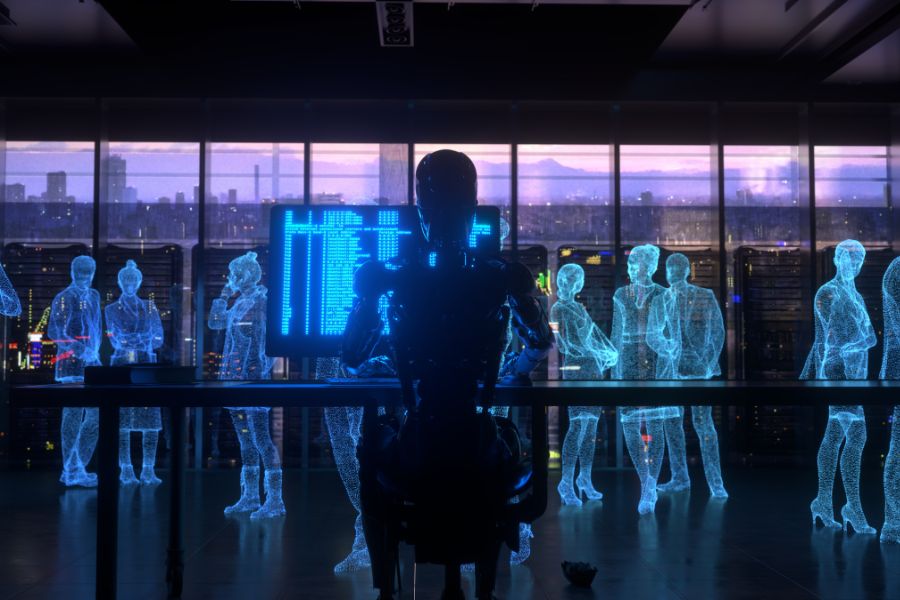
The engineering organization of the near future could operate differently from today’s models. Teams may include multiple AI systems supporting various roles:
- Code generation assistants producing initial implementation drafts
- Testing agents creating and validating test coverage
- Security agents scanning code and monitoring policy violations
- Documentation agents maintaining technical knowledge
- Operational AI systems analyzing production behavior and deployment performance
Human engineers would remain responsible for strategy, oversight, ethics, architecture, and final approval.
The Security and Governance Challenge
The growth of AI-native development also introduces new governance requirements. AI-generated outputs may include errors, hallucinations, insecure patterns, or compliance risks.
The Cybersecurity and Infrastructure Security Agency (CISA) emphasizes that AI adoption must be accompanied by security, accountability, and risk management considerations. This is especially important as AI systems gain broader access to engineering environments and production systems.
Organizations will need clear policies around AI tool usage, data protection, model governance, human review, and system accountability.
The Near Future Is Collaborative
Predictions about AI replacing developers often oversimplify the reality. The near future is more likely to involve collaboration rather than replacement. AI may handle repetitive and analytical tasks while humans focus on creativity, critical thinking, business context, and responsible decision-making.
This collaborative model could reduce engineering friction, shorten release cycles, and improve resilience when implemented responsibly.
Conclusion
AI-native development is moving software engineering beyond automation and toward intelligent systems that actively participate in the development lifecycle. The organizations that prepare early will not simply build software faster. They will build engineering environments capable of learning, adapting, and improving continuously.
The near future of development is unlikely to be fully autonomous. But it will almost certainly be more intelligent, more collaborative, and increasingly AI-native.