What the Future Looks Like for AI-Native Development
May 21, 2026, 3 min read
AI-native development is moving rapidly from concept to operational reality. While AI coding assistants and automation tools already influence engineering workflows, the future points toward development environments where intelligence is deeply integrated into every phase of software creation.
This shift could redefine not only how software is built but also how engineering teams collaborate, make decisions, and manage innovation.
AI-Native Development Is More Than Automation
Many organizations initially adopted AI to improve productivity through code suggestions and task automation. AI-native development goes further by positioning AI as an active participant in the software lifecycle.
According to Amazon Web Services (AWS), generative AI systems can create content, summarize information, and assist complex workflows, providing a foundation for increasingly intelligent engineering environments.
The future of development may therefore involve AI systems contributing not only to coding but also to planning, architecture, testing, deployment, and optimization.
Engineering Workflows May Become Goal-Driven
Traditional development often relies on step-by-step processes executed manually by teams. AI-native environments may become increasingly goal-driven, where engineers define objectives and AI systems coordinate portions of the execution process.
This could include:
- Automated code generation and refactoring
- Continuous testing and validation
- AI-assisted architecture recommendations
- Operational monitoring and remediation
- Intelligent documentation management
- Predictive release and deployment analysis
The Thoughtworks Technology Radar regularly highlights how engineering practices evolve alongside emerging tooling and intelligent systems, reinforcing that software delivery continues to become more adaptive and data-driven.
AI Agents May Become Standard Team Members
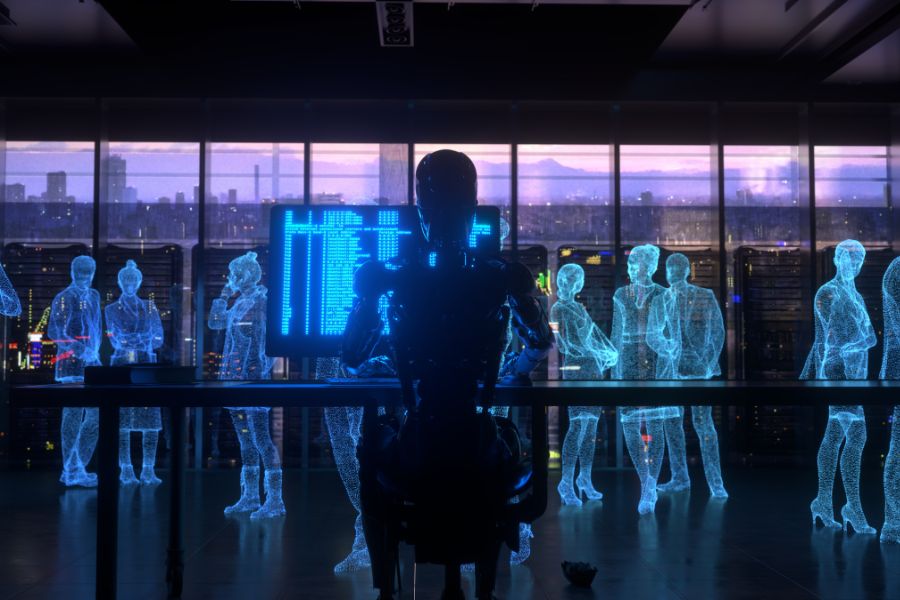
The future of AI-native development may involve specialized AI agents operating inside engineering environments.
Rather than using one general-purpose assistant, organizations may deploy multiple agents supporting distinct functions.
Examples could include:
- Development agents generating and refining code
- Security agents reviewing vulnerabilities and enforcing policy
- Testing agents validating functionality and coverage
- Operations agents monitoring infrastructure and deployment health
- Compliance agents supporting regulatory and governance requirements
Research from Anthropic research publications continues exploring increasingly capable AI systems and the implications of more advanced reasoning and autonomous behavior.
The Role of Developers Will Evolve
The rise of AI-native development does not necessarily signal the disappearance of developers. Instead, engineering roles may evolve significantly.
Developers may increasingly become orchestrators, reviewers, and system designers responsible for directing AI workflows and validating outcomes.
The DeveloperTech industry coverage reflects growing discussion around how AI is reshaping developer responsibilities while maintaining the need for human expertise and accountability.
This transition may place greater emphasis on architecture, critical thinking, communication, and AI literacy.
Security and Governance Will Become Core Priorities
AI-native environments introduce new complexity that requires stronger governance.
AI-generated code, model dependencies, autonomous actions, and data exposure concerns create risks that traditional development frameworks may not fully address.
The International Organization for Standardization (ISO) has emphasized the growing importance of standards and governance frameworks for artificial intelligence deployment and risk management.
Organizations adopting AI-native development may therefore need:
- AI governance policies
- Human approval workflows
- Model monitoring and validation
- Data protection controls
- Clear accountability structures
Without governance, faster development could introduce greater operational and security exposure.
The Future Is Likely Hybrid
Predictions of fully autonomous software engineering may underestimate the importance of human judgment and domain expertise.
The future is more likely to be hybrid — blending human creativity and strategic reasoning with AI-driven speed and scalability.
This model may allow organizations to deliver software faster while maintaining oversight, trust, and adaptability.
Conclusion
AI-native development represents one of the most significant shifts in modern software engineering. The future may include intelligent workflows, specialized AI agents, and increasingly adaptive engineering systems.
Yet the defining factor may not be how autonomous AI becomes. Instead, success may depend on how effectively organizations combine human leadership with machine intelligence to build secure, reliable, and innovative software ecosystems.